
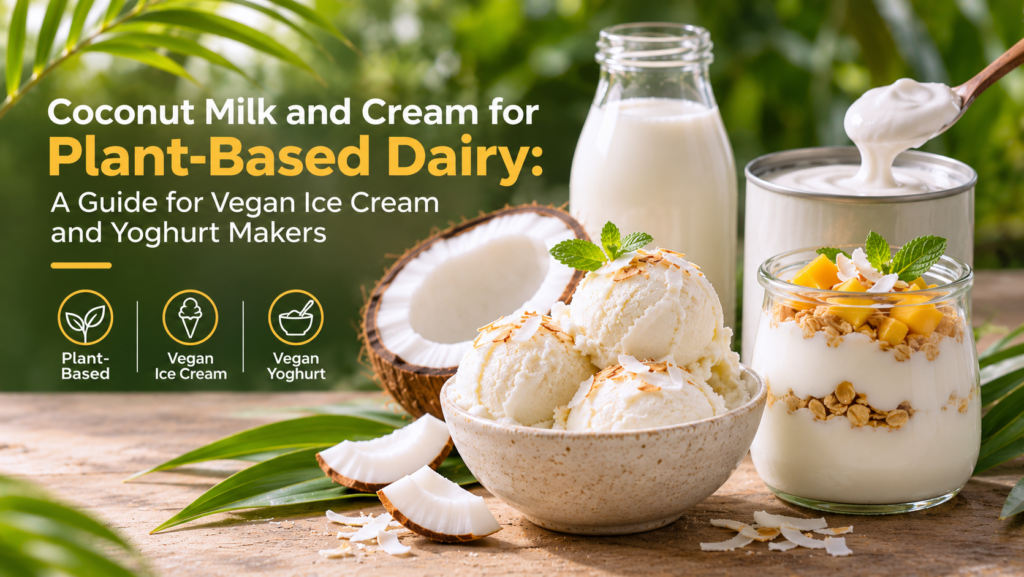
Coconut is one of the most popular bases for plant-based dairy, and for good reason. It is naturally rich and creamy, it has a pleasant neutral-to-sweet taste, and it is free from the major allergens found in soy and nuts. But the coconut milk or cream you choose will make or break your product. The wrong fat level, the wrong stabiliser or the wrong processing can lead to icy ice cream, thin yoghurt or a failed fermentation.
This guide explains how to choose and specify coconut milk and cream for plant-based ice cream, yoghurt, cheese and desserts — and what to ask your supplier.
Why Coconut Works So Well for Plant-Based Dairy
- High natural fat. Dairy products get their creaminess from fat. Coconut is one of the few plant bases with enough natural fat to match it without adding oils.
- Fat that sets. Coconut fat is mostly saturated and is solid at cool temperatures. This gives structure and a rich “bite” to ice cream and cheese alternatives.
- Allergen-friendly. Coconut avoids soy, nuts and gluten, making it suitable for many allergen-free product lines. Note that labelling rules differ by country — see the allergen section below.
- Consumer acceptance. Shoppers already know and like coconut, which makes coconut-based products an easy step for people trying plant-based dairy for the first time.
Coconut Milk or Coconut Cream? Matching Fat to Your Product
The biggest difference between coconut milk and coconut cream is fat. Coconut milk is lighter; coconut cream is richer. Typical commercial ranges are roughly:
| Base | Typical Fat Range | Best For |
|---|---|---|
| Light coconut milk | Around 5–10% | Drinking milks, light yoghurts, blends with other plant bases |
| Coconut milk | Around 15–19% | Spoonable yoghurt, desserts, puddings, sauces |
| Coconut cream | Around 20–25% | Premium ice cream, Greek-style yoghurt, whipping creams |
| High-fat coconut cream | Above 25% | Cheese alternatives, very rich desserts, concentrated bases for dilution |
Many manufacturers buy a higher-fat cream and dilute it with water in their own plant. This saves on freight because you are not shipping water across the ocean, and it lets you standardise the fat level exactly. Ask your supplier about custom fat levels if your recipe needs a specific figure.
Product-by-Product Guide
Plant-based ice cream
Fat controls creaminess and how fast the ice cream melts. Too little fat and the product tastes icy and thin. Coconut cream in the 20–25% range is a common starting point. Coconut fat also melts sharply at around body temperature, which gives a clean, rich mouthfeel.
Watch for: a strong coconut taste in non-coconut flavours like vanilla or chocolate. If you need a more neutral base, ask your supplier about mild-flavour grades or blend coconut with another plant base.
Dairy-free yoghurt
Yoghurt is made by fermenting the base with live cultures. This is where your coconut supply matters most.
- No preservatives. Preservatives such as sodium metabisulphite, sometimes used in coconut milk, can stop cultures from working. Ask for a base with no preservatives.
- Food for the cultures. Coconut is naturally low in sugar, and cultures need something to feed on. Most coconut yoghurt recipes add a small amount of sugar or a fermentable ingredient.
- Texture. Coconut yoghurt does not set the way dairy yoghurt does, because there are no milk proteins. Most manufacturers use a thickener such as starch, pectin or agar to get the right body.
- Low microbial count. A clean, commercially sterile base gives your chosen cultures the best chance of dominating the fermentation.
Cheese alternatives
Plant-based cheeses rely on coconut fat (often as coconut oil) to set firm when chilled and melt when heated. High-fat coconut cream or a combination of coconut cream and coconut oil is common. See our guide to virgin coconut oil for food manufacturers if you also need oil.
Creams, desserts and whipping cream
For whipped toppings, high fat is essential — the fat crystals hold the air in. Chilled coconut cream with a fat level of 22% or more is a typical starting point.
Clean Label: Stabilisers and Additives
Many coconut milks and creams contain small amounts of stabilisers and emulsifiers, such as guar gum or polysorbate, to stop the fat and water separating in the can or carton. For plant-based dairy, this creates a choice:
- With stabilisers — more consistent and easier to handle, but the stabiliser must appear on your label.
- Without stabilisers (“100% coconut”) — a cleaner label, but the base will separate naturally. You will need to mix or homogenise it before use, and your recipe controls the final texture.
Many plant-based brands now prefer a clean coconut base with no additives, and add their own chosen stabiliser in their own factory. This gives full control over texture and labelling.
Aseptic or Canned Base?
For industrial production, most plant-based dairy makers buy coconut milk or cream in bulk aseptic packs (bag-in-box, drums or IBC totes). This is cheaper per kilo than cans, creates less packaging waste and is easier to pump into production lines. Cans suit smaller producers, pilot runs and food service. Read our full comparison: aseptic vs canned coconut milk for food manufacturers.
A Note on Allergen Labelling
Rules on coconut as an allergen differ by market. The EU and UK do not include coconut in their lists of major allergens. In the US, the FDA stopped treating coconut as a tree nut allergen in January 2025. Rules can change, so always confirm the current position for each market with your regulatory advisor before finalising labels.
What to Ask Your Coconut Supplier
- What is the exact fat content, and can you supply a custom level?
- Does the base contain any stabilisers, emulsifiers or preservatives?
- Is it suitable for fermentation (no preservatives that affect cultures)?
- What is the flavour profile — strong coconut or mild?
- What bulk formats are available, and what is the shelf life of each?
- Which certifications apply — Organic, Fair Trade, Vegan-friendly, Halal, Kosher, BRC?
- Can you provide samples for pilot trials?
Coconut Bases for Plant-Based Dairy from Navik Mills
Navik Mills (Pvt) Ltd is a Sri Lanka-based coconut products manufacturer and exporter supplying food manufacturers and brands across 35+ countries.
- Coconut milk and coconut cream in bulk aseptic, canned and retail-ready formats
- Ask us about stabiliser-free bases and custom fat levels for your recipe
- Organic, Fair Trade, Halal, Kosher and BRC certification
- Batch certificates of analysis with every shipment
- Samples available for pilot and product development trials
Developing a new plant-based product? Contact our export team to discuss your recipe, request samples and get wholesale pricing.
Frequently Asked Questions
What fat content of coconut cream is best for vegan ice cream?
Coconut cream with around 20–25% fat is a common starting point for plant-based ice cream. Higher fat gives a creamier, slower-melting product. Many manufacturers buy a higher-fat cream and dilute it to their exact recipe.
Can you make yoghurt from coconut milk?
Yes. Coconut milk and cream can be fermented with live cultures to make dairy-free yoghurt. Use a base with no preservatives, add a small amount of sugar or fermentable ingredient for the cultures, and use a thickener such as starch, pectin or agar for texture.
Should I buy coconut cream with or without stabilisers?
It depends on your product. Stabilised bases are more consistent and easier to handle. Stabiliser-free bases give a cleaner label but will separate naturally and need mixing before use. Many plant-based brands prefer a clean base and add their own stabiliser.
Is coconut an allergen?
Coconut is not listed as a major allergen in the EU or UK, and the US FDA stopped treating it as a tree nut allergen in January 2025. Rules can change, so confirm the current position for each market before finalising your labels.
What format is best for large-scale plant-based dairy production?
Bulk aseptic coconut milk or cream, in bag-in-box, drums or IBC totes, is usually best for industrial production. It costs less per kilo than cans, reduces packaging waste and is easy to pump into production lines.
