
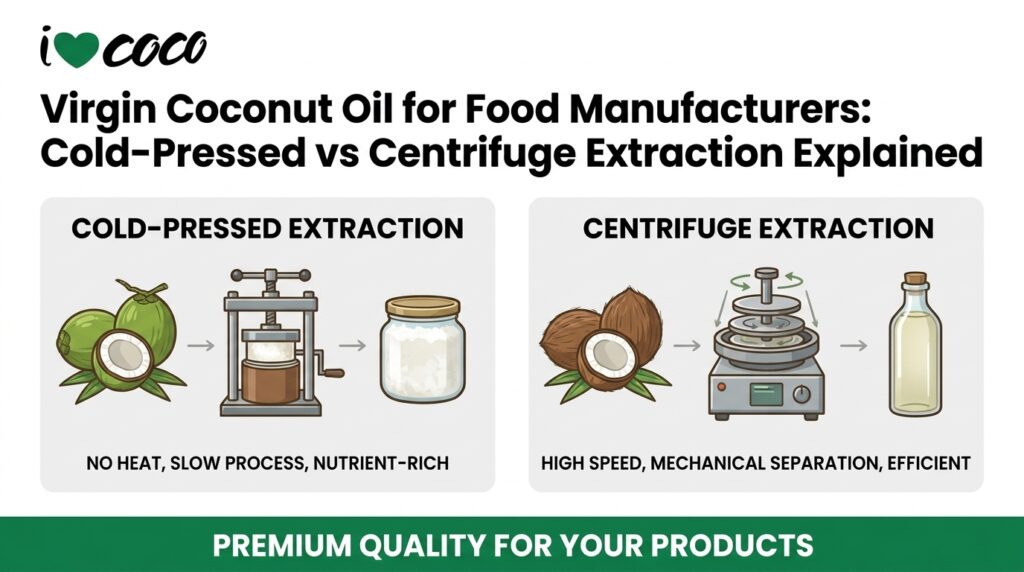
Virgin coconut oil (VCO) is marketed almost uniformly as a premium, minimally processed ingredient — but the extraction method behind a given batch can vary significantly, and it affects flavour neutrality, shelf life, cost, and how the oil performs in different formulations. The two dominant extraction methods, cold-pressed and centrifuge extraction, are often used interchangeably in marketing copy despite producing oil with genuinely different characteristics.
This guide breaks down how each method works, what it means for the finished oil, and how food manufacturers should think about matching extraction method to application when sourcing bulk virgin coconut oil.
What “Virgin” Actually Means for Coconut Oil
Before comparing extraction methods, it’s worth clarifying what “virgin” means in this category, since there is no single globally standardised legal definition — unlike, for example, “extra virgin” in olive oil, which carries a more codified regulatory meaning in some markets. In practice, “virgin coconut oil” is generally understood across the industry to mean oil extracted from fresh coconut meat (rather than dried copra) without the use of high heat or chemical solvents, and without further refining, bleaching, or deodorising after extraction.
This distinguishes VCO from RBD (refined, bleached, deodorised) coconut oil, which is typically produced from dried copra using heat and chemical processing, resulting in a neutral-flavoured, longer-shelf-life oil suited to different applications. Buyers evaluating VCO suppliers should confirm the specific extraction process used, since “virgin” alone doesn’t specify method.
Cold-Pressed Extraction: How It Works
Cold-pressed VCO is produced by mechanically pressing fresh coconut meat (or coconut milk derived from fresh meat) at low temperatures — generally below the threshold at which heat begins to degrade the oil’s flavour compounds and nutritional profile. The oil separates from the coconut milk either through natural fermentation and settling, or through mechanical pressing of dried, fresh coconut meat.
Characteristics of Cold-Pressed VCO
- Flavour and aroma: Cold-pressed VCO typically retains a more pronounced coconut aroma and flavour, since minimal heat is applied during processing. This is generally considered a desirable trait for applications where coconut flavour is wanted in the finished product.
- Nutrient retention: Because processing temperatures stay low, cold-pressed VCO tends to retain more of the naturally occurring antioxidants and bioactive compounds present in fresh coconut, compared to more heat-intensive processing methods.
- Yield: Cold-pressed extraction generally produces a lower yield per unit of raw material compared to centrifuge extraction, which is one of the factors contributing to its typically higher cost.
- Best suited to: Retail and premium food applications where coconut flavour and a “less processed” positioning are commercial selling points — health food retail, culinary oils, and premium private label ranges.
Centrifuge Extraction: How It Works
Centrifuge extraction (sometimes called the “wet-milling” or “direct micro-expelling” method, depending on the specific process variant) works by first extracting coconut milk from fresh grated coconut meat, then using high-speed centrifugal separation to mechanically split the oil from the water and solids in the milk — without fermentation, prolonged heat exposure, or chemical processing.
Characteristics of Centrifuge-Extracted VCO
- Flavour and aroma: Centrifuge-extracted VCO tends to have a milder, more neutral coconut flavour compared to cold-pressed oil, since the process is faster and involves less exposure time for aromatic compounds to concentrate in the oil.
- Processing speed and consistency: The centrifuge process is faster and generally more consistent from batch to batch, since it relies on mechanical separation rather than natural settling or fermentation, which can introduce more batch-to-batch variability.
- Yield: Centrifuge extraction typically achieves a higher oil yield per unit of raw coconut than cold-pressing, which generally translates to a more competitive cost per litre at bulk volumes.
- Best suited to: Food manufacturing applications where flavour neutrality is preferred — baked goods, confectionery, and formulated products where a strong coconut flavour would compete with other ingredients — as well as cosmetic and personal care applications.
Cold-Pressed vs Centrifuge: Side-by-Side Comparison
| Factor | Cold-Pressed | Centrifuge |
|---|---|---|
| Flavour intensity | More pronounced coconut flavour | Milder, more neutral |
| Typical yield | Lower | Higher |
| Typical cost per litre | Higher | More competitive at volume |
| Batch consistency | More natural variation | Generally more consistent |
| Best fit | Retail, premium, culinary applications | Food manufacturing, formulation, neutral-flavour needs |
Quality Markers That Matter Regardless of Extraction Method
Whichever method a supplier uses, several quality indicators are worth requesting as part of standard due diligence:
- Free fatty acid (FFA) content: A key freshness indicator — lower FFA generally indicates fresher raw material and more careful processing. Request the FFA specification and confirm it against the batch certificate of analysis.
- Moisture content: Elevated moisture can affect shelf life and increase rancidity risk. Reputable suppliers control this tightly regardless of extraction method.
- Peroxide value: An indicator of oxidative rancidity — request current test results, particularly for shipments facing longer transit times.
- Colour and clarity: High-quality VCO should be clear and colourless to very pale, regardless of extraction method. Cloudiness or discolouration can indicate processing or storage issues.
Packaging and MOQ for Bulk VCO
- Bulk drums (175kg–190kg): The standard format for food manufacturers and ingredient distributors buying at volume.
- IBC totes: Available for very high-volume buyers, reducing per-litre packaging cost further.
- Retail-ready glass jars (250ml–1L): For private label retail and culinary oil programmes.
Minimum order quantities generally follow standard Sri Lanka export norms — a Full Container Load (FCL), typically 18–20 metric tonnes, offers the most competitive per-litre pricing, with LCL (Less than Container Load) consolidation available for smaller volumes at a higher unit cost and extended lead time. Total lead time from order confirmation to EU or US port arrival typically runs 6–10 weeks.
How to Decide Which Extraction Method Fits Your Formulation
- Do you want coconut flavour in the finished product, or are you formulating around it? Cold-pressed suits products where coconut flavour is a selling point; centrifuge-extracted oil suits formulations where a neutral fat is preferred.
- What’s your cost sensitivity at volume? Centrifuge extraction generally offers a more competitive cost structure at high production volumes.
- How are you positioning the product to your buyer or consumer? If “cold-pressed” is a specific claim your target market values — common in health food and premium retail — confirm your supplier can document the actual extraction method, not just apply the term generically.
- Do you need consistent flavour across large production runs? Centrifuge extraction’s greater batch consistency can simplify formulation reproducibility at scale.
Virgin Coconut Oil from Navik Mills
Navik Mills (Pvt) Ltd is a Sri Lanka-based organic coconut products manufacturer and exporter supplying food manufacturers, importers, and retail brands across 35+ countries. Our virgin coconut oil is available with documented extraction methodology, and certificates of analysis — including FFA, moisture, and peroxide value — provided per production batch.
- Organic, Fair Trade, Halal, Kosher, and BRC certification across our VCO product line
- Available in bulk drums, IBC totes, and retail-ready glass jars for private label
- Full vertical integration from own plantations through export-ready packaging
- Extraction method and quality documentation available on request for buyer due diligence
Sourcing bulk virgin coconut oil for your production line? Contact our export team to request specification sheets, samples, and wholesale pricing.
Frequently Asked Questions
What is the difference between cold-pressed and centrifuge-extracted coconut oil?
Cold-pressed VCO is mechanically pressed at low temperatures and typically retains a more pronounced coconut flavour, while centrifuge extraction uses high-speed separation to split oil from fresh coconut milk, generally producing a milder, more neutral-flavoured oil with a higher yield. Both fall under the “virgin” category, but the extraction method affects flavour, cost, and yield differently.
Is cold-pressed coconut oil healthier than centrifuge-extracted oil?
Both methods avoid the high heat and chemical processing used in refined (RBD) coconut oil, so both are generally considered less processed than refined alternatives. Cold-pressed oil may retain marginally more of certain heat-sensitive compounds due to lower processing temperatures, but the difference between the two virgin extraction methods is generally smaller than the difference between either method and refined oil.
Which extraction method is better for food manufacturing?
It depends on the application. Centrifuge-extracted oil’s milder flavour and greater batch consistency often suit formulated products like baked goods and confectionery, where a strong coconut flavour isn’t desired. Cold-pressed oil suits applications where coconut flavour is a selling point, such as premium retail and culinary oils.
What is the minimum order quantity for bulk virgin coconut oil from Sri Lanka?
A Full Container Load, typically 18–20 metric tonnes, offers the most cost-efficient pricing. Smaller quantities are available through LCL consolidation for manufacturers trialling the product or ordering below full container volumes, though this adds cost and lead time.
How do I verify a supplier’s stated extraction method is accurate?
Request documentation of the specific processing method used, along with a facility visit or third-party audit report if possible. Reputable suppliers can describe their extraction process in detail and provide consistent certificates of analysis confirming quality markers like FFA and peroxide value across production batches.
